
Can THC Be Absorbed Through the Skin?
Yes. While standard topical creams only interact with surface skin receptors, THC transdermal patches use specialized permeation enhancers that allow active cannabinoids to bypass the skin’s outer barrier and enter the bloodstream directly for continuous, body-wide relief.
Whether you are looking for long-lasting relief without the smoke or simply want a discreet, set-it-and-forget-it way to consume cannabinoids, THC dab patches have become an incredibly popular innovation in the cannabis space.
But how exactly does a sticker on your skin deliver a systemic high or localized relief? Here is a deep dive into the science, mechanics, and unique benefits of how THC transdermal patches work.
Transdermal vs. Topical
To understand transdermal patches (THC indica transdermal patches, THC sativa transdermal patches), it helps to contrast them with standard cannabis topicals (like lotions, salves, or balms).
- Topicals (Localized): When you rub a THC cream onto your skin, the cannabinoids bind to the localized cannabinoid receptors ($CB_1$ and $CB_2$) in the upper layers of your skin and muscles. The THC does not breach the bloodstream. You get localized relief, but absolutely no psychoactive effects.
- Transdermal (Systemic): Transdermal means “across the skin.” These patches are engineered to bypass the skin’s natural barrier completely, driving cannabinoids directly into your bloodstream. Because the THC enters your systemic circulation, a transdermal patch can produce a psychoactive high and full-body relief.
How the Patch Penetrates the Skin Barrier
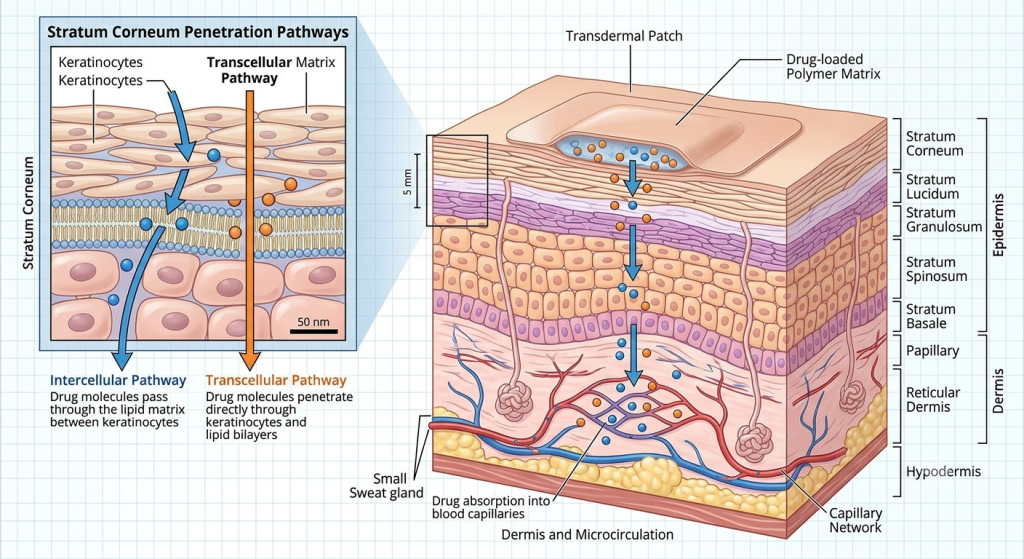
The human skin, specifically the outermost layer called the stratum corneum, is designed to keep things out. It acts as a highly effective waterproof shield. Cannabinoids like THC are naturally lipophilic (fat-soluble) and have relatively large molecular weights, making it incredibly difficult for them to pass through this barrier on their own.
Transdermal patches solve this problem using a multi-step delivery mechanism:
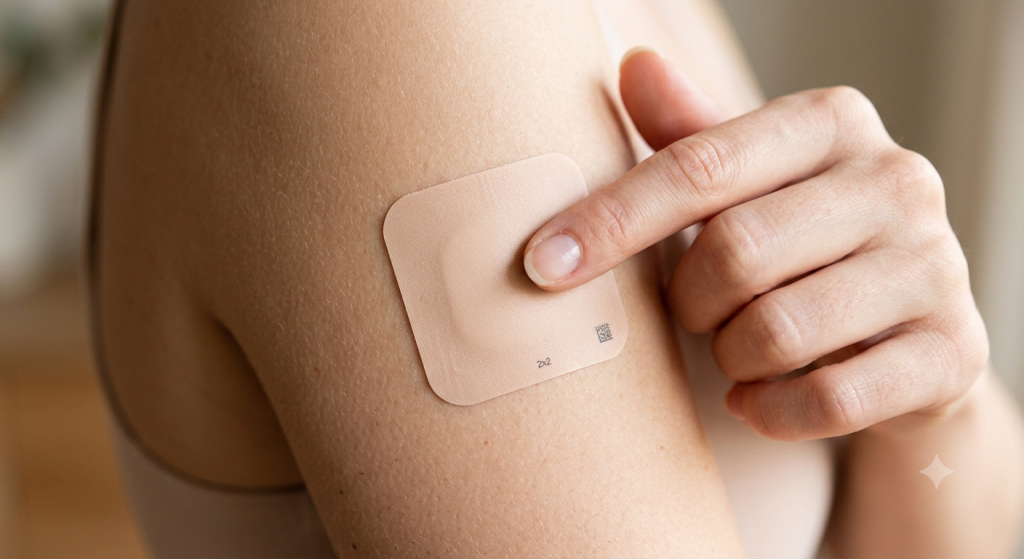
a) Permeation Enhancers
The secret sauce of any transdermal patch is the inclusion of chemical permeation enhancers. These are safe, specialized compounds (like terpenes, fatty acids, or alcohol carriers) mixed with the THC. They temporarily alter the lipid structure of the stratum corneum, opening up microscopic pathways so the THC molecules can slip through.
b) The Controlled Release Membrane
Most premium patches utilize a matrix or reservoir system.
- In a reservoir system, a literal pocket of liquid THC sits behind a semi-permeable rate-controlling membrane.
- In a matrix system, the THC is infused directly into the adhesive layer itself.
Both methods rely on a concentration gradient. Because there is a high concentration of THC in the patch and zero concentration in your skin, osmotic pressure naturally pushes the THC out of the patch and into your tissue at a steady, metered rate.
c) Bloodstream Absorption
Once the THC passes the outer skin layers, it reaches the dermis. The dermis is packed with thousands of tiny capillaries (blood vessels). The THC easily diffuses through these capillary walls, entering your bloodstream to be carried throughout the entire body and up to the brain.
Transdermal Patches vs. Edibles vs. Vaping
| Method | Onset Time | Duration | Key Advantage |
|---|---|---|---|
| Transdermal Patch | 30–60 Mins | 8–12 Hours | Steady, continuous relief; bypasses digestion |
| Vaping / Inhalation | 1–3 Mins | 1–3 Hours | Fast onset for acute symptoms |
| Oral Edibles | 45–90 Mins | 4–8 Hours | Long-lasting, but processed through liver |
Why Choose a Patch? The Unique Benefits
Transdermal patches offer several major pharmacological advantages over smoking, vaping, or eating edibles.
Avoidance of the “First-Pass” Effect
When you swallow an edible, the THC must travel through your digestive tract and your liver. The liver heavily metabolizes the compound, converting {9-THC} into the much more potent {-hydroxy-THC}. This process can take hours and dilutes the amount of active THC that actually makes it to your system. Patches bypass the stomach and liver entirely, delivering pure 9{-THC} straight to the blood.
True Extended Release
While smoking peaks within minutes and edibles peak around 2 hours, transdermal patches are designed for time-release delivery. A single patch can steadily release a consistent milligram dosage of THC over 8, 12, or even 24 hours. This eliminates the “peaks and valleys” of dosing, offering sustained relief without the need to constantly re-medicate.
Instant On/Off Switch
If you eat an edible and realize you’ve taken too much, you unfortunately have to ride out the experience. With a transdermal patch, if the psychoactive effects or sensations become too intense, you can simply peel the patch off. While the THC already in your bloodstream will still take some time to dissipate, the active delivery of new THC stops immediately.
How to Get the Most Out of a Transdermal Patch
To ensure the patch adheres properly and the THC can break through the skin barrier effectively, follow these best practices:
- Choose a High-Vascular Area: Apply the patch to a clean, lean area of skin where blood vessels sit close to the surface. The inner wrist, top of the foot, inside of the ankle, or behind the shoulder blade are ideal locations.
- Prep the Skin: Wash the area thoroughly with soap and water (or an alcohol wipe) to remove natural body oils, dirt, or lotion barriers. Let it dry completely before applying.
- Avoid Excess Hair: Hair creates an air barrier between the patch and your skin. Choose a hairless area, or gently clip the hair down before application (avoid shaving immediately beforehand, as micro-cuts can irritate when the adhesive is applied).
We believe that after this article, you can now explain to your friends and family when they ask how do thc transdermal patches work.
Explore our engineered transdermal options, including our 1:1 CBD: THC Transdermal Patch and THC Indica Transdermal Patch, or view our full collection of cannabis transdermal patches for sale.
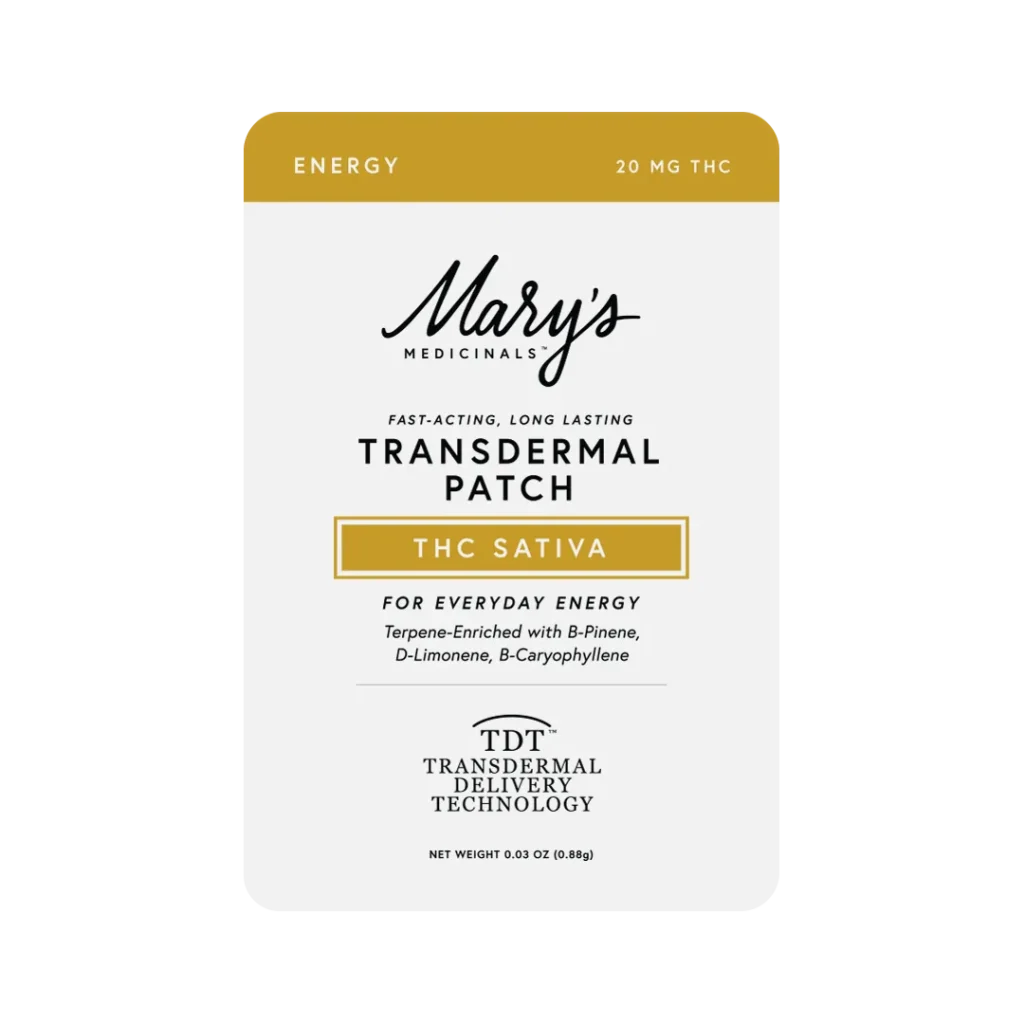
THC Sativa Energy Transdermal Patch | DAB Patch
How To Use
The patch is most effective when applied to a venous part of the body, like the top of the foot or inner wrist. Cleanse and dry skin prior to application. Remove plastic liner and press patch firmly onto skin. Effects last up to 12 hours. The patch should be worn continuously.
Ingredients
Cannabis extract, eucalyptus, and naturally derived terpenes.